60 Claude Accounts Suspended Overnight: A Wake-Up Call for AI Dependency
Last Saturday, Belo, a leading fintech company in Latin America, saw over 60 of its employees’ Claude accounts suspended overnight. There was no warning, no specific violation explanation, just a cold automated email stating: “Policy violation detected.” Want to appeal? Sorry, there’s only a Google form available, and no customer service number.
Fortunately, the company’s CEO, Pato Molina, shared the incident on social media. After being covered by various media outlets, the situation quickly gained traction and sparked widespread discussion.
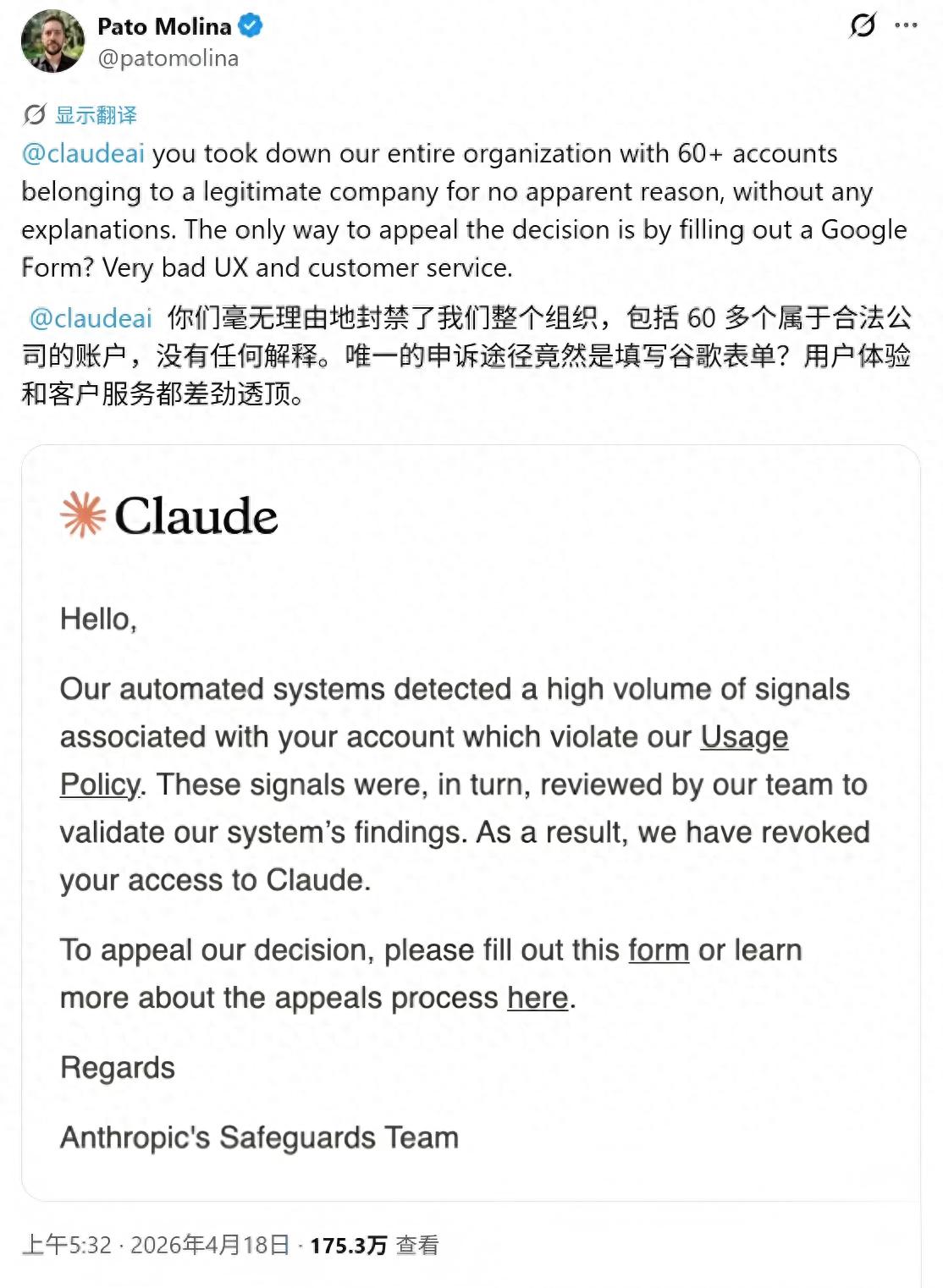
After enduring 15 hours of public pressure, Anthropic finally admitted it was a “misjudgment” and restored the accounts. However, those 15 hours represented significant losses for a company serving millions of users with an annual transaction volume exceeding $1 billion. Who will compensate for these losses? No one has said.
This incident is not an isolated case; it serves as a wake-up call for all businesses relying on AI: handing over critical operations to others can lead to dire consequences.
Don’t Rely Solely on One Account for Your Business
This incident exposes a critical reality: too many businesses and individuals are betting their entire workflows on a single AI provider.
You pay for the service and think you are a customer. But in the eyes of the platform, you are just an account that can be suspended at any time.
They have their own risk control models and review mechanisms. Trigger a red flag? Suspended. Algorithm glitches? Suspended. Even if nothing is wrong, a system misjudgment can still lead to suspension—leaving you waiting.
What’s worse is that all your assets are trapped inside: prompts, conversation history, work context, accumulated data… Once the account is suspended, these assets evaporate in an instant.

This is not about “AI serving humans”; it’s humans chasing after AI. Wherever it goes, you must follow. If it suddenly stops, you’re left hitting a wall.
Four Survival Tips for Businesses
Don’t expect AI providers to always be friendly. In the business world, terms can change at any moment. You need to build your own defenses.
First, don’t tie your core business to a single interface.
Use intermediary APIs to connect multiple models. If GPT fails, switch to Claude; if Claude is suspended, switch to DeepSeek. Always be ready to switch, so you’re not hanging by a thread. It’s like running a restaurant; don’t rely on just one supplier, or if they run out of stock, you’ll have to close.

Second, regularly back up your data.
Conversation history, work context, prompts—these are your tangible assets. Keep a local copy and another in a private cloud. If the account is lost, the data remains, and you can work elsewhere.
Third, prioritize using APIs and avoid being overly dependent on front-end accounts.
APIs have much lower dependency on account status. If issues arise, you can just switch keys and continue. If a front-end account is suspended, you can’t even log in.
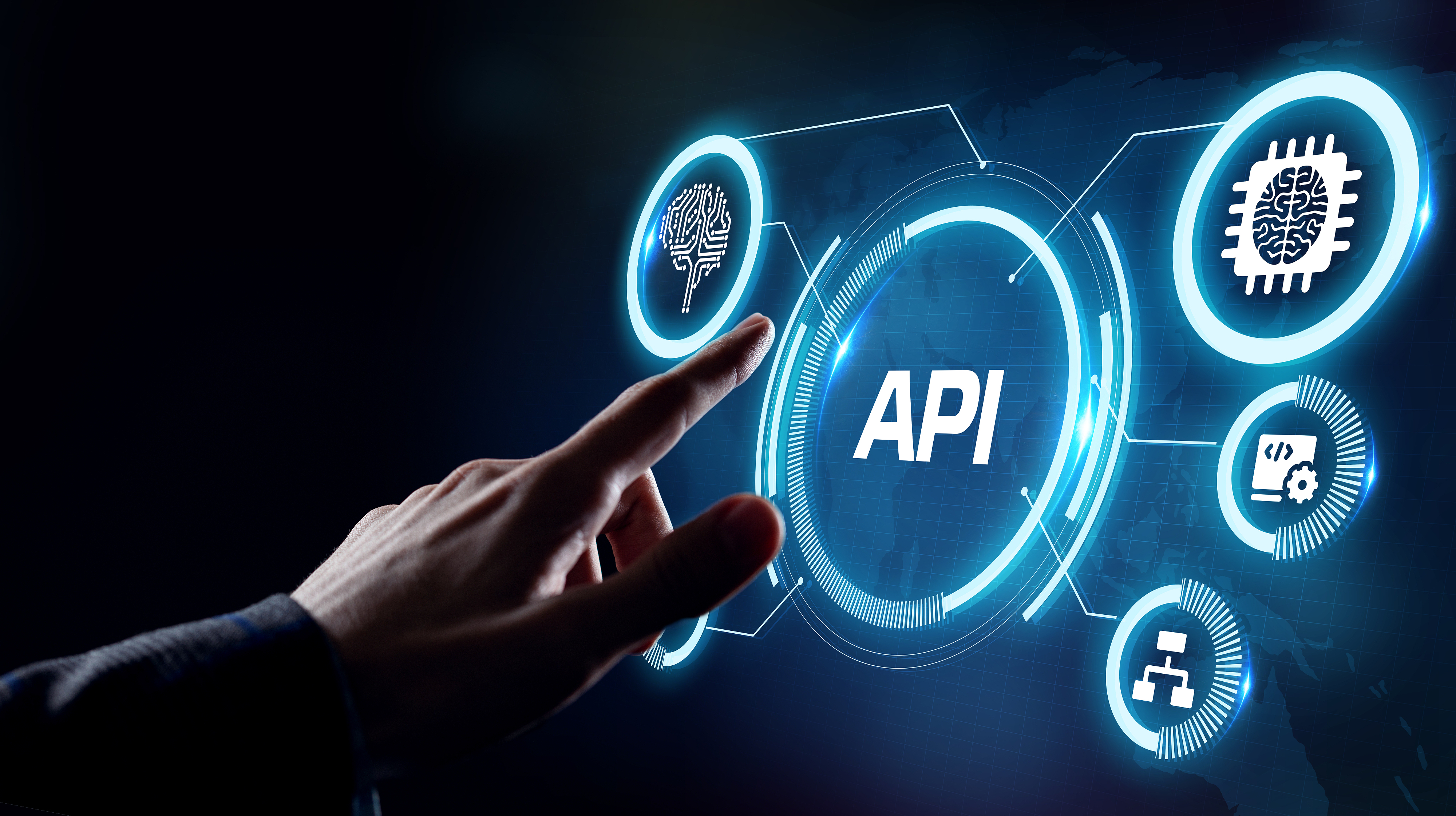
Fourth, and most importantly—treat AI as an external capability integrated into your own management software.
The first three suggestions point in the same direction: return AI to its role as a tool. You shouldn’t revolve around AI; instead, AI should serve you.
How to achieve this? You need a data foundation centered on your business, not a bunch of scattered chat logs in various AI providers’ clouds.
Yunbiao Platform is designed for this purpose. It serves as a development base for enterprise management software—you don’t need to write code; you can create ERP, MES, and WMS systems just by drawing tables.

Then, through rich API interfaces, you can bring in large models like Claude, GPT, and DeepSeek as “external capabilities.” All data generated from AI interactions automatically integrates into your own business forms and processes, rather than being trapped in a vendor’s chat window.
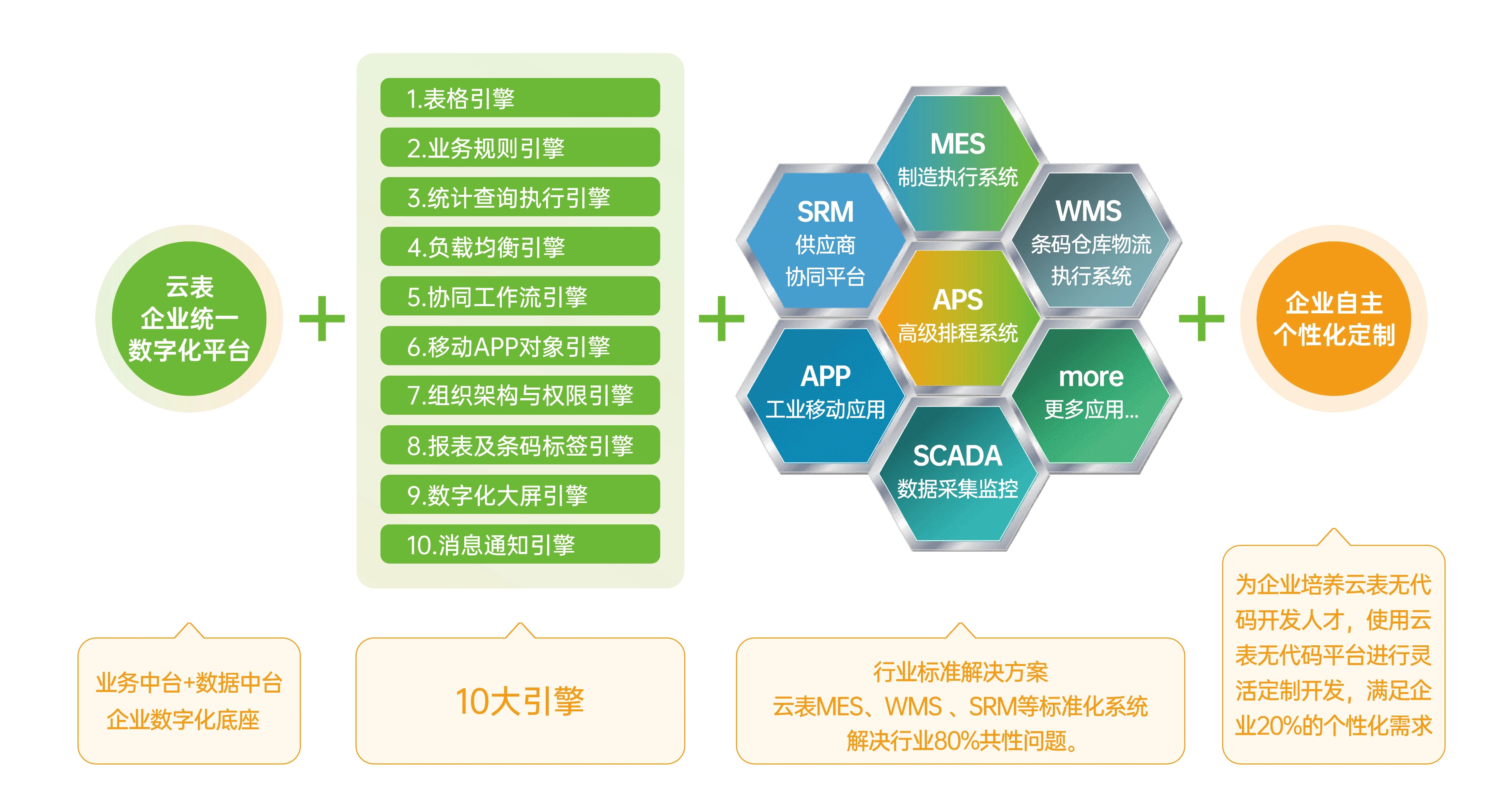
If one model gets suspended? Just switch the API key. Your business continues, your data remains, and your workflow stays unchanged.
What you rely on is your own built enterprise software architecture, not an account from some AI provider. This is true empowerment.
Individuals Should Also Avoid Over-Reliance
Businesses need to mitigate risks, and individuals should also be cautious.
Establish a “model-agnostic” way of working. What does this mean? Your prompts, workflow logic, and operational habits should be as universal as possible. Avoid binding yourself to specific features of any product.
Maintain the ability to switch models at any time. Using one today and another tomorrow should just be a matter of changing tools. Your accumulated methods, judgments, and experiences are your core assets. Tools can be changed, but these capabilities cannot be taken away.
Conclusion
The AI field is far from stable. Today, it might be Anthropic suspending your account; tomorrow, who knows? What is certain is that there will be more “misjudgments” and more instances of “suspension without communication.”
The only thing you can do is not to hand over your fate to others.
Tools can be swapped at any time; your business, your data, and your constructed architecture are what truly belong to you.
Don’t gamble on a single AI. If you lose the bet, no one will compensate you.
What do you think about this? We welcome your thoughts and insights in the comments.
Comments
Discussion is powered by Giscus (GitHub Discussions). Add
repo,repoID,category, andcategoryIDunder[params.comments.giscus]inhugo.tomlusing the values from the Giscus setup tool.